The FuzzFactory Concept
Creative music production as effortless as possible -
create an amazing sound during tracking
and finish your mixes with ease.
Nothing beats tracking with a clear sonic intention - and nothing can replicate a great vibe after the fact. Committing to a distinct sonic imprint during recording using analog tools inspires the performer and makes mixing a breeze.
The FuzzFactory approach is to make this process completely seamless. This encompasses every single aspect of production: acoustics, vintage equipment, computers, monitoring, and tools - both big and small. A well-placed reading lamp for lyrics can be just as crucial as a world-class preamp. Keeping everyone comfortable is just as essential as being able to rely 100% on the gear. FuzzFactory's technical layout is designed to make this entire workflow highly accessible, intuitive, and fun.
Connections

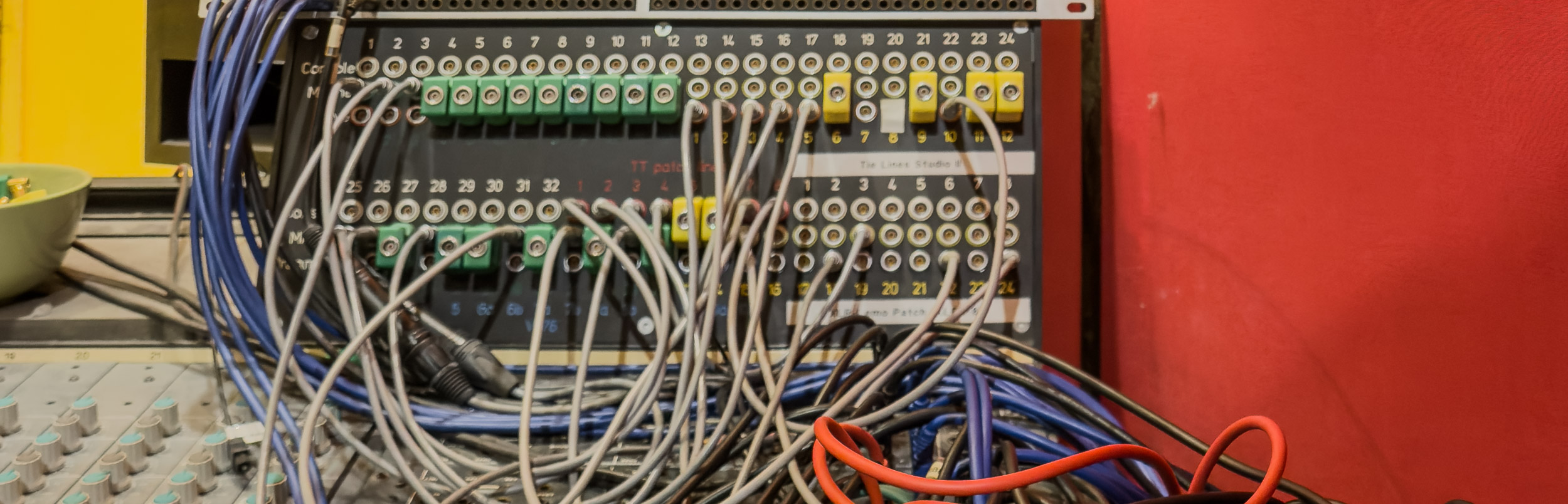
Let’s start with what seems like the most boring part of a studio, but is actually its nervous system: the patchbays. Every single signal can be routed here. Microphone lines run through a dedicated patchbay utilizing Lemo technology - the absolute gold standard for low-level signals. Two 24-way microphone stage boxes in the live room are wired with premium Mogami multicore cables, allowing you to patch directly into any preamp or the console. Dedicated mic lines to the small room and the vocal booth ensure seamless connectivity throughout the entire complex.
Line-level signals utilize a TT (Bantam) patchbay, granting instant access to all outboard gear, converters, and console inputs and outputs. A dedicated XLR-to-TT panel allows for lightning-fast integration of any external gear you bring along. Furthermore, high-quality speaker lines from all rooms terminate at a central Speakon patchbay for effortlessly swapping amplifiers and monitors. This delivers maximum flexibility without anyone ever having to crawl behind racks or run cables through open doors.
Computer & DAWs
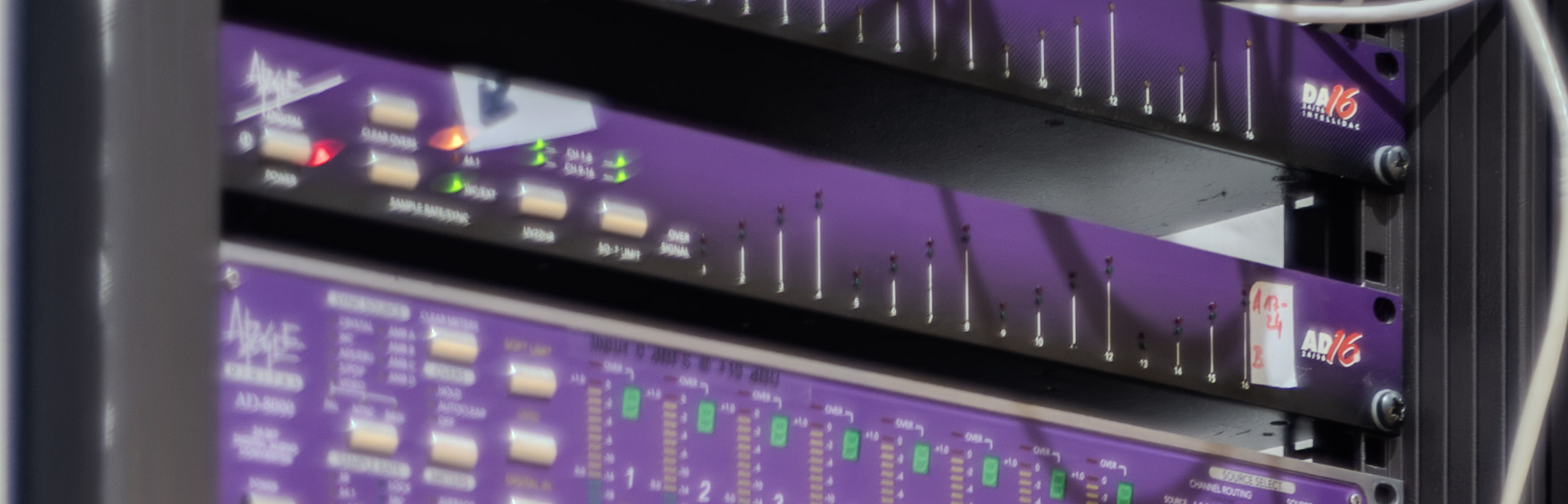
Our AD/DA conversion is handled by Apogee AD16 and DA16 units, offering 32 pristine inputs and outputs. They interface with an RME MADIface USB via an RME ADAT-to-MADI converter. At the heart of the digital setup is a custom-built, high-end PC (Intel / 32GB RAM / 16-DSP UAD system / extensive plugin collection). While our house DAW is Cubase, the system can run virtually any DAW setup.
A major advantage of the MADIface - aside from its legendary RME stability - is that it connects to the host computer via a single USB cable. This makes it incredibly easy to hook up your own laptop and work entirely within your personal, familiar environment if you prefer. To ensure an absolutely pristine listening environment, the computer and all gear with active cooling fans reside in a separate machine room outside the control room. No background noise, no distractions - just pure sound.
Monitoring
A custom-built passive relay system takes care of input sources and speaker selection. Monitors available for switching include Sony SRS-Z1, Auratones, iLoud MTM, Genelec 1030 with a custom subwoofer and a custom-built main monitor system. The latter two utilize dedicated room correction applied directly at the system level, while the iLouds features built-in calibration. An independent headphone feed routes to a Class-A headphone amplifier with its own volume control, perfectly matching all industry-standard headphone types.
All this ensures maximum accuracy and flawless translation to the outside world - meaning zero disappointments when checking your mix in the car!
Foldback Monitoring
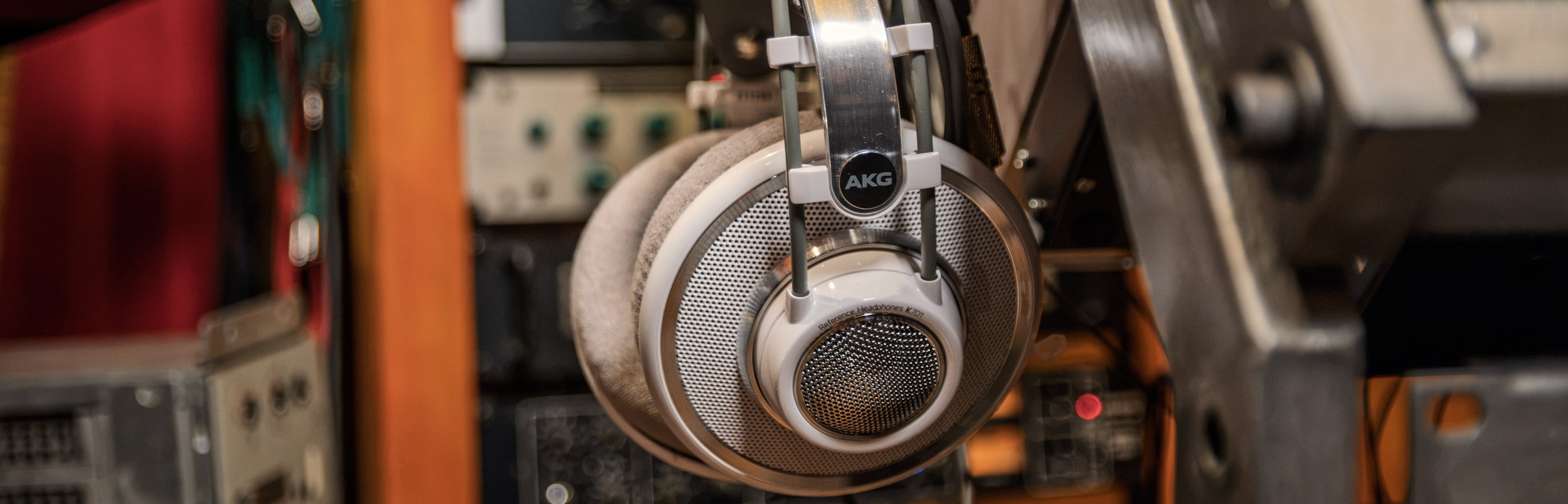
The musician's headphone monitoring utilizes a Behringer Powerplay system with P16-M personal mixers. Our standard setup in Cubase routes 8 of the 16 available channels to the instruments currently being recorded, utilizing auto-input monitoring via Cubase's cue sends. The remaining 8 channels deliver signals like the click track, playbacks and effects. This approach makes dialing in a great monitor mix absolute child's play. Available headphones include the industry standards Sony MDR-7506 and AKG K-182.
The Console
The center of our analog world is an 80s classic: a DDA AMR24 console. This split-design desk features 36 input channels, 24 group/monitor channels, a 4-band semi-parametric EQ on both inputs and monitors, a variable high-pass filter on the input channels, 2 stereo and 4 mono aux sends along with balanced busses.
We heavily modified this console to fit a modern workflow: it was physically split to integrate a dedicated DAW workspace right in the sweet spot. Additionally, the meter bridge was removed for superior acoustic behavior and ergonomics. It was originally designed to run with two synchronized analog tape machines - today, it bridges the best of both worlds.